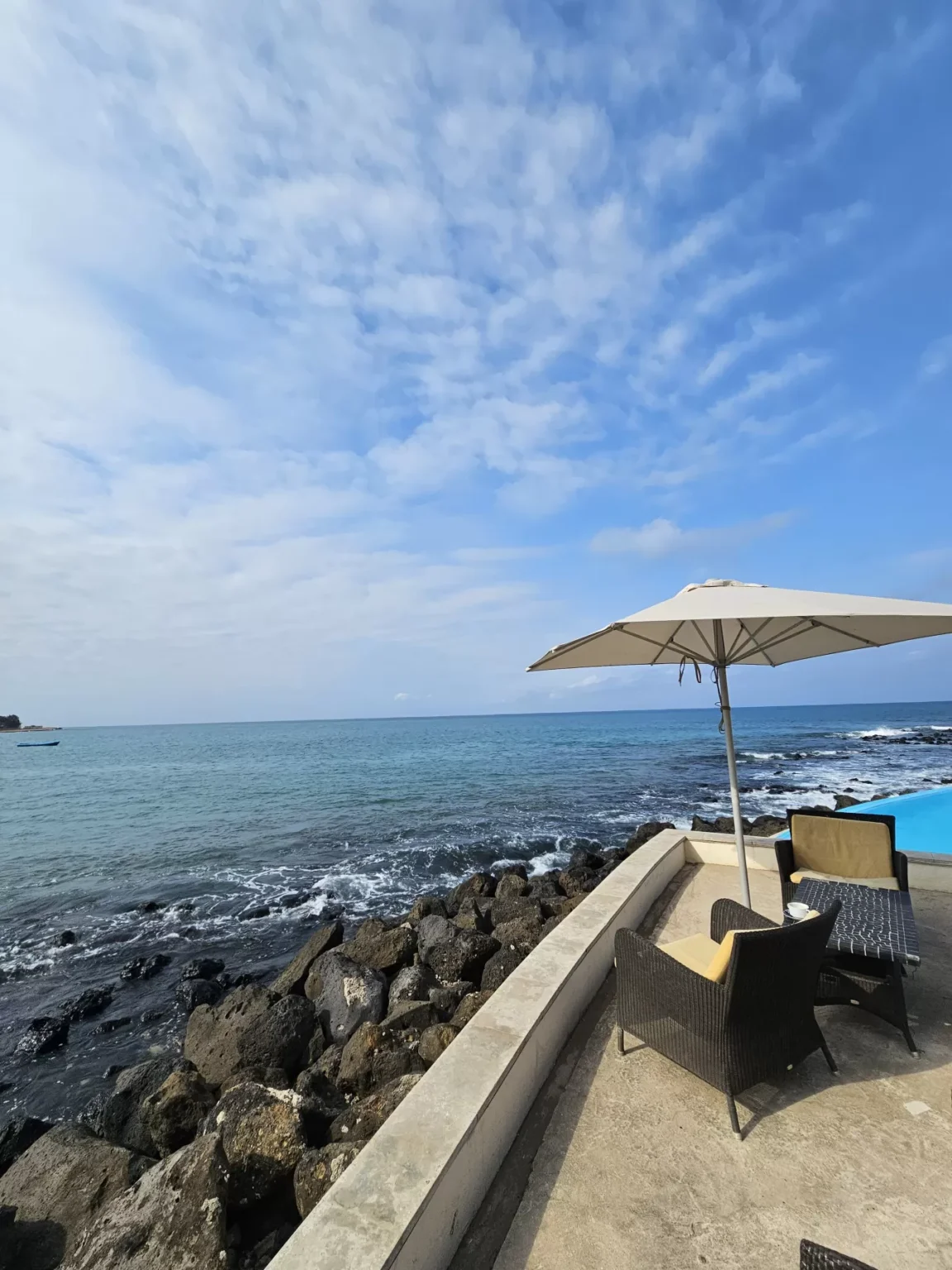
There are still corners of the world that haven’t been Instagrammed into oblivion: São Tomé and Príncipe, an archipelago folded into the Gulf of Guinea like a green whisper, remains one of them.
Portuguese navigators stumbled upon these volcanic islands in the 15th century and found them empty, untouched, impossibly lush.
Five centuries later, the place still feels like a confidence shared between old friends rather than a destination shouted from hotel rooftops.
More yachts moor annually in Monaco than tourists visit here.
That obscurity has been deliberate. But now, this equatorial microstate has opened a door that reframes everything: a citizenship by investment program priced at US$90,000, processed in roughly six weeks, and rooted in a place where the national philosophy is captured in two words: leve-leve. Easy-easy.
It isn’t just the world’s most affordable mainstream second passport. It might also be the most seductive.
Where Einstein’s theory met paradise
In 1919, British astronomer Arthur Eddington came to Príncipe Island during a solar eclipse to test Einstein’s theory of general relativity. He succeeded. The skies above these islands are still that clear, still that generous with their revelations.
Below them, life unfolds at its own tempo.
Santo António, Príncipe’s capital, holds the Guinness record as the world’s smallest. You can walk from end to end before your espresso cools.
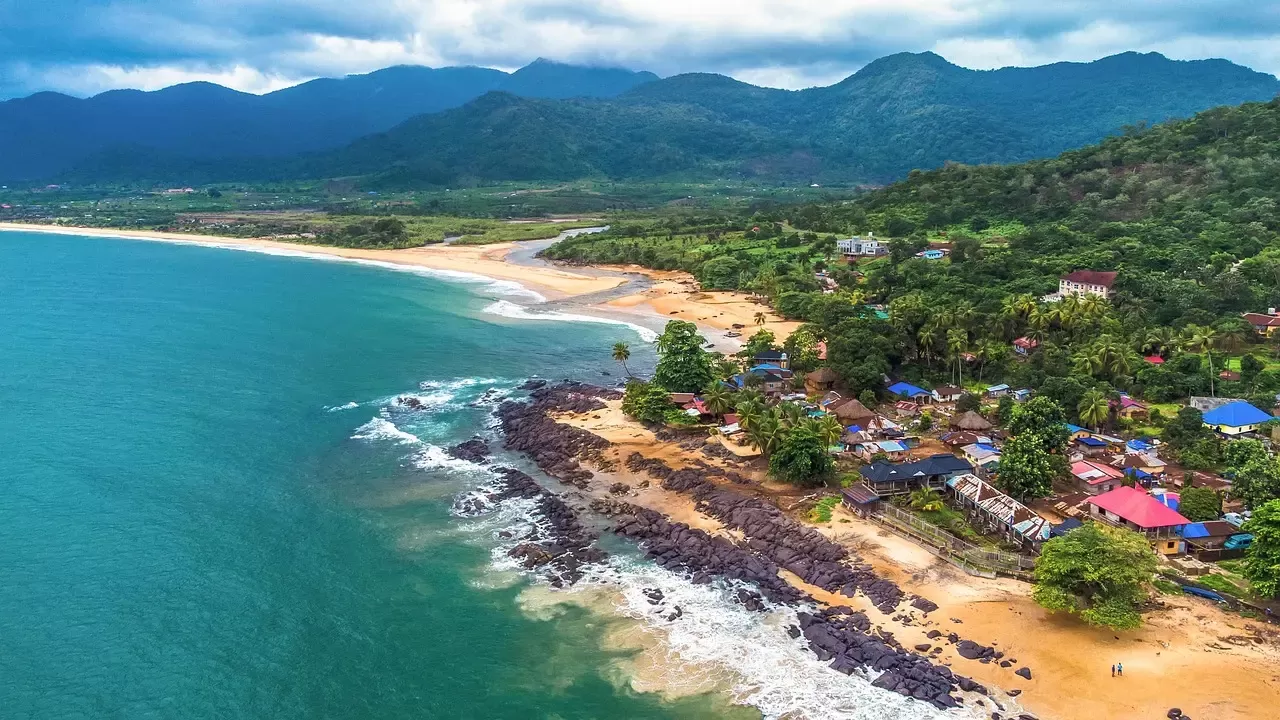
The island itself is a UNESCO Biosphere Reserve, a tangle of jungle, waterfalls, and endemic birds that exist nowhere else on Earth. Five species of sea turtles nest along beaches that curve with such geometric precision they look drawn by a single confident stroke.
Banana Beach, once the backdrop for a Bacardi commercial, remains largely empty. The water is the temperature of a good bath.
São Tomé city, the larger island’s hub, moves faster but still refuses urgency. One traffic light presides over the main intersection, and locals treat it as a suggestion rather than a commandment.
Colonial-era plantation houses, their pastel facades softened by decades of tropical rain, sit half-swallowed by bougainvillea. At dusk, music spills from bars where Angolan rhythms blend with Portuguese guitar into island genres like Ússua, a sound as unhurried as the place itself.
Crime rates rank among the lowest in Africa. Walking alone after dark feels natural rather than reckless, a luxury that grows rarer by the year in most capitals.
The arithmetic of escape
São Tomé and Príncipe’s citizenship by investment program launched in September 2025 with a clarity that startles. One donation, US$90,000, to a National Transformation Fund aimed at renewable energy, education, and infrastructure.
Applications route through a Dubai-based Citizenship Investment Unit that targets six-week processing times. Families qualify generously: spouses, adult children up to 30, parents over 55.
There are no gold requirements, no ancestry filters, no five-year residency clocks. Because the program is brand new, there’s no backlog, no application chaos, no waiting behind thousands of earlier entrants.
Just a straightforward exchange: capital for citizenship in a peaceful, Portuguese-speaking microstate with dual nationality protections and a government betting on becoming the first fully green-powered country in its region.
Compare that architecture to its peers, and the picture sharpens.
Sierra Leone offers a gold-backed permanent residency alongside citizenship through fast-track naturalization. The Heritage route, requiring African ancestry and DNA testing, costs US$100,000. The broader Fast-Track path runs US$140,000, more than 50% above São Tomé’s threshold. The GO-FOR-GOLD framework is ambitious and resource-anchored, appealing to investors who want business exposure and heritage connection. But for simplicity and price, São Tomé undercuts it cleanly.
Botswana has announced a US$75,000 CBI slated for early 2026, which would, if launched as proposed, set a new floor. Two problems: the program isn’t operational yet, and Botswana’s citizenship law doesn’t currently allow dual nationality. Parliament must amend it first. Until those legal changes pass and the program goes live, Botswana remains a compelling theory rather than an actionable option. São Tomé, by contrast, is fully operational, tested, and ready.
Egypt operates in an entirely different weight class. Minimum donation sits at US$250,000, with real estate options starting at US$300,000 and business routes requiring US$350,000 plus a US$100,000 donation. Processing stretches six to nine months. Egypt offers scale, diversified pathways, and MENA market access, but at nearly triple São Tomé’s cost and five times the timeline. For investors seeking a low-cost, rapid-acquisition second passport in a tranquil setting, the Egyptian framework is overbuilt.
São Tomé isn’t competing on these terms. It’s redefining them.
The logic of pleasure
Numbers tell part of the story. The rest lives in the texture of the place.
Political stability here isn’t a talking point; it’s a lived reality in this democratic and peaceful nation. The cost of living stretches your money in ways that feel almost anachronistic compared to overheated global capitals.
Housing, services, transportation, and local food fall into what residents describe as the “wait, I can actually live well here” zone, comparable to Southeast Asia but with far fewer people and considerably better chocolate.
This is a country where cacao and coffee aren’t just exports but elements of national identity, where Portuguese remains the official language spoken alongside local creoles that blend African syntax with Lusophone melody.
The passport itself offers strategic positioning for West African markets and easier mobility across Lusophone nations, the kind of business reach most island paradises can’t match.
Digital infrastructure is improving rapidly because the government actively wants to attract remote professionals and entrepreneurs.
Running a business from a porch with ocean views is not a fantasy; it’s the operating model for a growing cohort of residents who discovered that “office” is a flexible concept when your commute involves a short walk to the beach.
The cuisine folds Portuguese technique around African ingredients: grilled fish with palm oil and chili, calulu stew simmered with smoked pork and leafy greens, banana and papaya that taste like they were invented yesterday.
The rhythm of life bends toward simplicity. Markets open when they open. Meals stretch as long as the conversation demands. The ocean is always close, always audible.
What surprises newcomers most is the warmth. São Toméans are famously welcoming, the kind of people who greet you by name after two visits and genuinely mean it when they ask how you’re doing.
Integration happens easily because the culture is built on friendliness and community, not transaction. You know your neighbors. You feel safe anywhere. Your contribution to a country this small actually matters in visible, tangible ways.
The investment beyond the passport
Unlike crowded markets where you’re competing with mega-resorts and corporate franchises, São Tomé’s local economy favors small and medium investors.
There’s real space for boutique lodges, cacao or coffee farms, eco-villas, wellness retreats, and micro-enterprises that would struggle to find a footing in saturated destinations.
Tourism returns are quietly excellent. Because the country remains uncommercialised and authentically raw, boutique accommodations sell out during peak months. The eco-tourism crowd is growing fast, and rental yields often outperform crowded Caribbean markets where supply has overtaken demand.
Your second home becomes your escape, your investment, your retirement plan, and your crisis hedge all at once.
This is paradise before paradise gets franchised. A place that still feels genuinely wild, where development means solar panels and education rather than strip malls and time-share pitches.
For the globally mobile professional, the family hedging against uncertainty, or the investor who has already acquired three passports and is now looking for one that feels less like a financial instrument and more like a place, São Tomé delivers something rare: a Plan B you might genuinely fall in love with.
It’s a bolt-hole that doesn’t feel like hiding. It’s a second passport that comes with an actual place to be.
How the smart money moves
NTL Trust, one of the first licensed agents of São Tomé and Príncipe‘s CBI program, has positioned itself at the center of this new chapter. With deep experience across West Africa and the global CBI spectrum, NTL Trust benchmarks São Tomé against alternatives like Sierra Leone, Botswana, and Egypt for client-specific profiles.
We clarify documentation, coordinate with the Dubai-based CIU, and align citizenship strategy with lifestyle planning, asset protection, and legacy structuring.
For investors ready to explore São Tomé’s program in detail, the entry point is straightforward: info@ntltrust.com.
The world’s most secluded little country is no longer a rumor whispered between cacao traders and astronomers. It has become a fully priced, intelligently structured, beautifully livable second citizenship.
One that happens to come with beaches that look hand-drawn, skies that once proved relativity, and a national ethos that insists, gently but firmly, on taking things easy.
The yachts in Port Hercules still outnumber the tourists here.
For a select group of investors, that’s precisely the point.