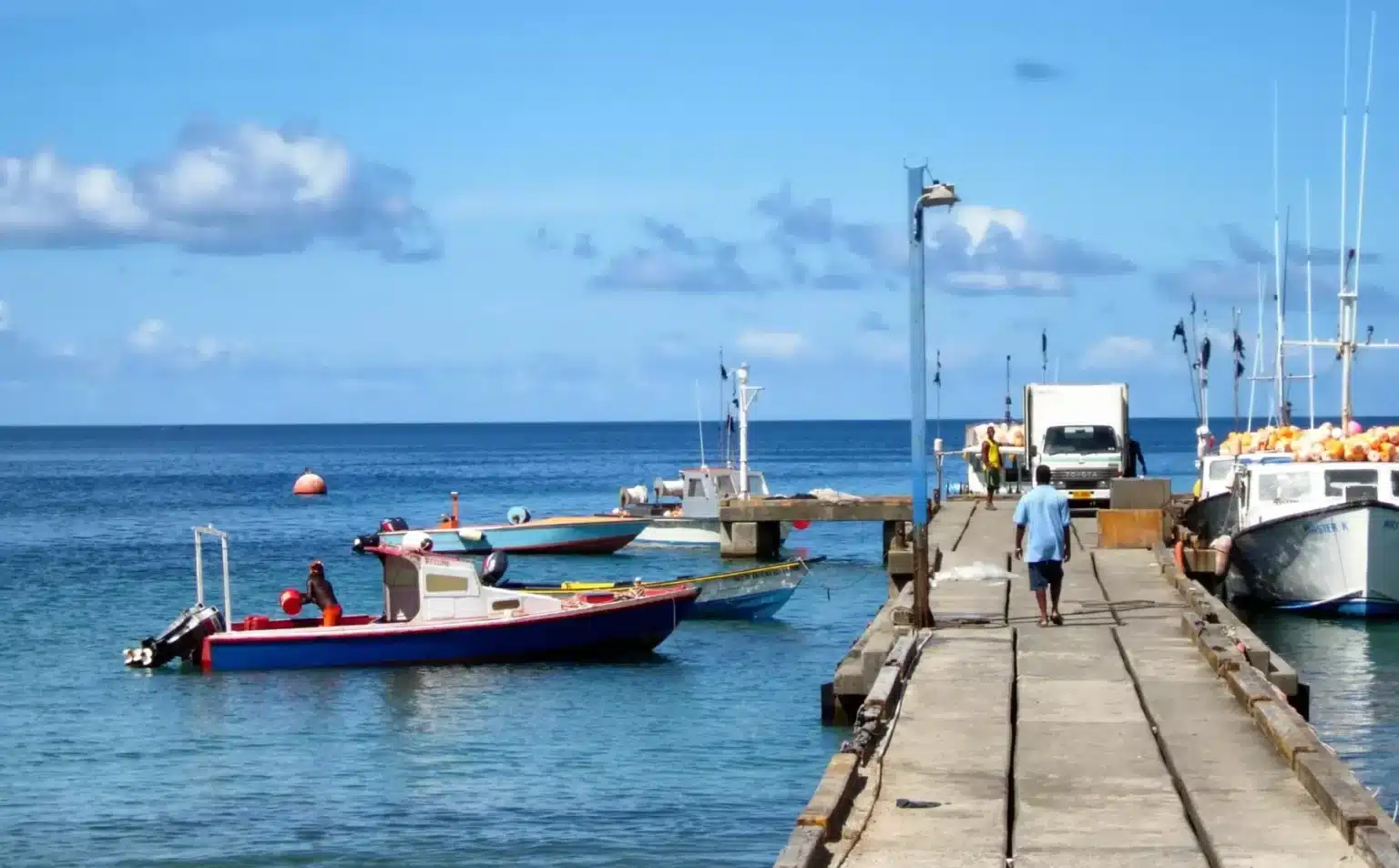
It is a Tuesday in February, and it is raining in London. Not the cinematic kind. The grey, sidelong, gets-into-your-collar kind that makes you walk faster without arriving anywhere worth being. You are on the Jubilee line, or in a taxi on the Embankment, or staring through a restaurant window at a sky the color of wet cement. Somewhere on your phone, probably in a folder you haven’t opened since the last time you felt this way, there is a photograph of a beach.
You took it yourself. Grand Anse, maybe, or Frigate Bay. The water in the picture is a color that doesn’t exist in northern Europe between October and April. You remember the afternoon you took it. You remember thinking: We should do this more.
You didn’t.
Most people don’t. High earners, especially, are paradoxically bad at this. They have the means to be anywhere on earth and the habits that keep them in the same three postal codes. The holiday gets pushed. The family trip becomes “next year.” The Caribbean stays on the phone, inside a folder, behind a lock screen, two swipes away from a life that never quite starts.
Here is the part where citizenship by investment changes the arithmetic.
Caribbean Citizenship Residency Requirement: Six days a year
The five Eastern Caribbean nations that operate citizenship by investment programs have adopted, or are in the process of adopting, a physical residency requirement under the ECCIRA regional framework. New citizens must spend an aggregate of 30 days in their country of citizenship within the first five years.
Thirty days across five years. Not 30 days a year. Not 30 consecutive days. An aggregate. Spread however you like across a half-decade.
That is six days a year.
Less than a week. Less than most people spend recovering from Christmas. Less than you spent last year doing something you cannot now remember. Six days in the Caribbean, every year, for five years, and then a second passport in your hand and a tan on your shoulders you didn’t plan for.
When the requirement was first announced, industry commentary focused on whether it would deter applicants. The framing was procedural: A new compliance box. An added obligation. A reason to hesitate.
That framing misses something large.
The permission you didn’t know you needed
There is a particular kind of successful person who cannot take a holiday without a reason. Not a desire. A reason. A board meeting in Zurich justifies three days in the Alps afterward. A conference in Singapore makes a weekend in Bali feel earned. Without the pretext, the trip doesn’t happen, because leisure without a justification feels, to this person, like something close to failure.
If you recognize yourself in that paragraph, the residency requirement is not a burden. It is a prescription.
Six days a year, mandated by the terms of your citizenship. Written into law. You are not indulging yourself. You are fulfilling a legal obligation. The most productive thing you can do with that Tuesday in February is board a flight to Grenada and sit on a beach your children will remember for the rest of their lives.
No one needs to know how little it costs you to comply.
What six days actually look like
A Monday flight lands you in St. George’s by late afternoon. The air hits you at the door of the aircraft, warm and salt-heavy, and something in your posture changes before you reach the terminal. You had forgotten this part. Everyone forgets this part.
Tuesday morning. Grand Anse is nearly empty before nine. The children are in the water. You are reading something you chose, not something someone sent you. There is no agenda. Your phone works, if you want it to. You don’t, particularly.
Wednesday. A boat takes you somewhere you’ve never been. There are sea turtles, or a waterfall, or a spice plantation where your daughter decides she wants to be a farmer. You eat grilled fish at a place with no signage and four plastic tables. It is the best meal you will have this year. You do not Instagram it. You are too busy eating.
Thursday. The resort has a sailing lesson. Your son, who is ten and afraid of everything, sails. He will tell this story for years. So will you.
Friday. You do nothing, and it is enough. More than enough. You sit on a balcony with coffee that tastes like it was grown ten minutes ago, because it nearly was, and you watch the light move across the water, and you think, with something between relief and mild disbelief: This was a legal obligation.
Saturday. You fly home. You have been gone five days. You have satisfied nearly a full year’s residency requirement. You are tanned. Your children are speaking in an accent they picked up from the dive instructor. Your spouse is looking at property listings.
You will do this again.
The arithmetic of avoidance
Consider what you spent the last five Februaries doing. Add the Januaries. Add the grey Novembers, the dead Marches, the Sundays in April when the forecast said partly cloudy but meant entirely dispiriting.
Now imagine that scattered across those months, you had spent a total of 30 days in the Caribbean. Not because you are the sort of person who takes lavish holidays. Because you are a citizen, and citizens show up.
Thirty days. Six short trips. A few long weekends and one proper family holiday. In exchange, you would have a second passport, a second home jurisdiction, a place where your children feel as comfortable as they do in their own garden.
The cost of the residency requirement is almost nothing. The cost of not having it, of spending another five years meaning to go and never going, is the one you are already paying.
The family vacation, rehabilitated
Somewhere in the last decade, the family holiday became a logistics exercise. Fourteen browser tabs. Three comparison sites. A spreadsheet your partner made that you pretend to have read. Everyone compromises. No one is thrilled. You go to the same place you went last year, or somewhere algorithmically recommended by a platform that knows your credit card history better than your preferences.
Caribbean residency simplifies this in a way that sounds trivial and turns out to be transformative. You are going to Grenada, or Antigua, or St. Kitts. That question is settled. What remains is the part that actually matters: What will you do when you get there?
Over five years, a family with citizenship builds something that tourists never get. A favorite restaurant. A beach they know by a name the locals use, not the one on the brochure. A rental house where the owner leaves mangoes on the counter because she knows you’re coming. A Tuesday routine. A place that is theirs.
Children, in particular, absorb this. A ten-year-old with a Caribbean second home is not a spoiled child. She is a child who knows that the world is larger than her postcode, that people live differently and well, that the sea is warm in February and cold in English, and that her family chose this. That last part matters more than you’d expect.
The question underneath the question
Most people who inquire about Caribbean citizenship are not, in the first instance, thinking about beaches. They are thinking about tax planning, or geopolitical diversification, or visa-free travel, or a Plan B they hope never to execute. The residency requirement barely registers on their list of concerns.
Then they comply with it. They spend their six days. They come back.
And the next time they call, the conversation is different. They want to know about schools. About property. About whether the catamaran they saw in the marina is the kind of thing a person could own without it becoming a full-time job. The residency requirement didn’t deter them. It introduced them to something they didn’t know they wanted.
This is the part of citizenship by investment that brochures get wrong and experience gets right. The passport is a document. The residency is a life. A short one, six days at a time, but vivid and real and yours in a way that a holiday never quite is, because a holiday ends and this doesn’t. This comes back, every year, with the same warm air and the same empty morning beach and the same slow realization that you have been overthinking this for a very long time.
Stop imagining it
You know the version of yourself who lives part of the year in the Caribbean. You have met him on a Sunday evening, halfway through a bottle of wine, sketching plans on the back of a menu. You have met her at the school gates, promising the children that this summer will be different. You have met this person in the mirror, on mornings when the weather is bad enough to make anywhere else feel like a revelation.
That person is not a fantasy. That person is a six-day-a-year commitment and a phone call away.
The residency requirement is not an obstacle between you and Caribbean citizenship. It is the part of Caribbean citizenship you will talk about at dinner parties. It is the part your children will remember when they are 30. It is the part that turns a passport from a document in a drawer into a life you actually live.
Thirty days across five years. Six days a year. The obligation you’ll wish you had sooner.
You already know you want this. The only question left is the one you’ve been avoiding: What are you waiting for?
Contact NTL Trust to learn more.